Why an Open Hour Makes a Weekend Plan Easier to Keep
An open hour in a weekend plan gives changing energy and delays somewhere to go, helping you keep the activities you care about without rushing.
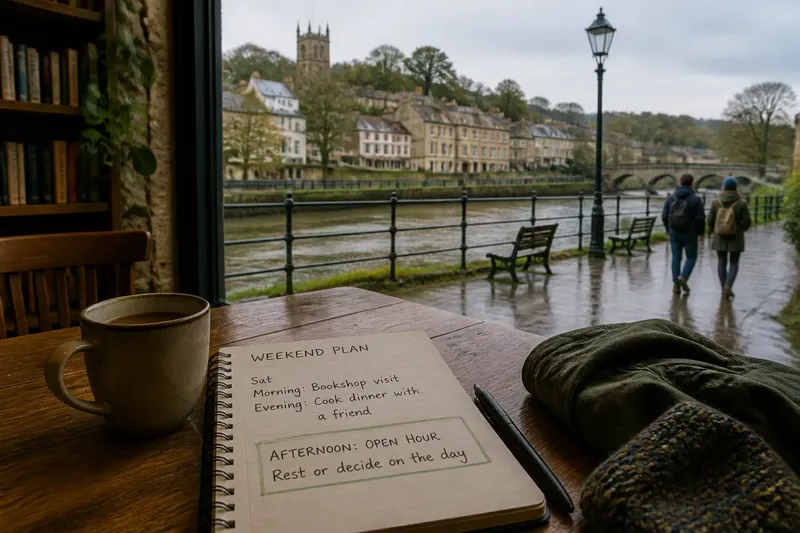
How can you make a weekend plan easier to keep when energy dips or an outing runs late? Leave one open hour: an unassigned stretch that can absorb a delay, become a rest, or hold a small activity you choose on the day. An open hour in a weekend plan is not wasted time; it is room to adjust without abandoning the whole day.
What an open hour does
A plan often feels fragile when every part depends on the previous one ending on time. If lunch must finish before a booked activity, which must finish before a visit across town, a small delay can make the rest feel impossible. An open stretch interrupts that chain. It gives you somewhere to move the delay, pause, or decision.
Think of it as the slack in a favourite jumper: a little give makes movement easier. The hour need not sit in the middle of the day, and it does not need a fixed activity attached to it. Its purpose is to preserve choice while keeping the day’s main intention intact.
This differs from a packed schedule with a spare slot marked “just in case”. That slot can quickly become another obligation. An open hour works best when it belongs to nobody in advance. You can use it, shorten it, or leave it quiet.
Three ways to leave room
There is no single right place for the open hour. Compare these three approaches by considering what tends to change in your plans: the start, the middle, or your energy.
Leave a soft start
Keep the first part of the day free of a firm appointment. This suits people who prefer a slow breakfast, have different morning rhythms, or find that getting out of the door takes longer than expected. A later start can make the day feel welcoming rather than already behind schedule.
The trade-off is that a soft start may not help if your main activity has a fixed arrival time. If you have a booking, place the open stretch elsewhere and protect the time needed to get there.
Leave a middle gap
Place unassigned time between two planned activities. This suits days with a definite outing followed by something you still want to do, such as a relaxed meal at home. The gap can absorb a late bus, a longer visit, or the need to sit down before the next part.
Choose a gap that is genuinely free, rather than one filled with errands. If it is merely a transfer between locations, it is travel time, not an open hour.
Leave the ending open
Make the last part of the day flexible. This suits anyone who wants a satisfying start without needing to predict how long they will feel sociable or energetic. You can continue with a gentle activity, return home, or let the evening remain quiet.
An open ending is less useful when you need to catch a particular train or meet someone at a set time. In that case, keep the necessary travel and arrival time clear, and leave a different part of the day unassigned.
Choose by likely change
Ask what is most likely to shift. If waking and getting ready are unpredictable, choose a soft start. If an activity could overrun, leave a middle gap after it. If you cannot tell how much company or activity you will want later, keep the ending open.
Then decide what the day must retain to feel worthwhile. It might be the walk, the visit, or simply time together. Put that anchor in the plan first. Arrange optional activities around it, and let the open hour protect the anchor instead of competing with it.
Say you plan to visit a bookshop in the morning and cook dinner with a friend in the evening. If browsing often takes longer than you expect, leave the afternoon free rather than adding a museum visit and a café stop. If the bookshop visit ends promptly, you might choose a short walk; if it runs late, the evening still has room to begin calmly. The result you are aiming for is observable: the important plans remain possible without rushing between them.
Keep the hour truly open
Some decisions make flexible time easier to use without turning it into another task:
- Mark the time as open. Use a simple note in your calendar rather than naming a backup activity.
- Keep it near a likely pinch point. Place it after a long journey or an activity that may overrun.
- Limit what can displace it. Avoid adding chores just because a gap appears on the page.
- Agree on its purpose. If you are planning with someone else, say that the time is available for rest or a spontaneous choice.
- Choose a nearby fallback. If you want options, think of something easy to reach, such as a local park or a comfortable place to sit, without booking it in advance.
- Let it stay unused. A quiet hour can be the useful choice, not a failure to make a plan.
Keep practical limits visible. If an activity has an arrival time, ticket, or other condition, check the relevant booking details and allow for travel separately. An open hour is flexible time, not a substitute for arrangements that need to be honoured.
Questions about open time?
Does the open hour have to last exactly an hour?
No. Treat “hour” as a useful name for a stretch of unassigned time, not a strict duration. Leave enough room for the kind of delay or pause you want to absorb, while adapting the plan to your day.
Should I decide what to do with it beforehand?
You can keep a few easy possibilities in mind, but avoid choosing one as the default appointment. The point is to make the decision when you know how the day is going, rather than adding another commitment now.
What if the hour gets filled by chores?
Decide in advance whether chores belong in this space, instead of letting them claim it automatically. If the purpose is recovery or flexibility, keep household tasks elsewhere and protect the open stretch.
Can a shared plan include different uses for the hour?
Yes. One person might prefer a rest while another takes a short walk, provided the arrangement suits everyone involved. Agree on a simple check-in point so nobody mistakes separate choices for a change to the whole plan.
Make the choice visible
Once you have chosen where to leave room, make the plan legible to everyone taking part. Write down the fixed commitment, the open stretch, and any travel that cannot be shifted. This prevents flexible time from being mistaken for an invitation to squeeze in another destination.
If the day is planned with others, describe what remains optional. You might say that the morning visit is the main plan and the afternoon is free to rest or decide together. Clear expectations reduce the pressure to treat every available moment as shared activity.
An open hour in a weekend plan is most useful when it protects the part of the day you care about. Put the fixed anchor where it belongs, leave a real stretch unassigned at the point most likely to need it, and choose on the day whether to use that room. A plan can then hold its shape without asking the day to follow a perfect timetable.