The Supply-Pile Fallacy: Start a Creative Pastime with One Material
Start a creative pastime with one material to spend less time choosing supplies and more time learning what you enjoy making at home.
How do you start a creative pastime without turning it into a shopping project? Start a creative pastime with one material: choose something easy to handle, set a small making prompt, and notice what the material lets you do. You can decide what else you need after you have spent time working with it.
A pile of supplies can look like preparation, but it also creates choices before you know which choices matter. One material gives your attention a place to settle. This is not a rule against tools or future purchases; it is a way to let the first session teach you what to add.
Choose the material
Begin with a material you can get without a complicated search and use without specialist equipment. Paper, air-dry modelling clay, fabric scraps, wool yarn or fallen leaves can each support a modest first experiment. Pick one, not a themed collection.
Let your interest decide. If you like arranging colour, paper or leaves may appeal. If you want to feel a form take shape in your hands, clay could be a better fit. If you enjoy repeated motions, try yarn or fabric. The first choice is not a commitment to a new identity; it is simply the starting point for an afternoon.
Check what the material is like to store and handle in your available space. A sheet of paper can sit on a table, while clay may need a surface that is easy to clean. For materials with particular handling or disposal requirements, follow the product label or maker’s instructions.
Set a small prompt
Give yourself a task with a visible finish, but leave the result open. “Make a paper shape that suggests a leaf” is more useful than “be creative”: it points you towards an action without dictating the final appearance. A prompt helps you begin, yet it should not require another material to work.
Keep the task small enough to hold in mind. You might arrange several paper shapes on a table, press a simple form into clay, or make a short length of yarn into a loose looped pattern. These are starting points, not standards to meet. If the material leads somewhere unexpected, follow that direction.
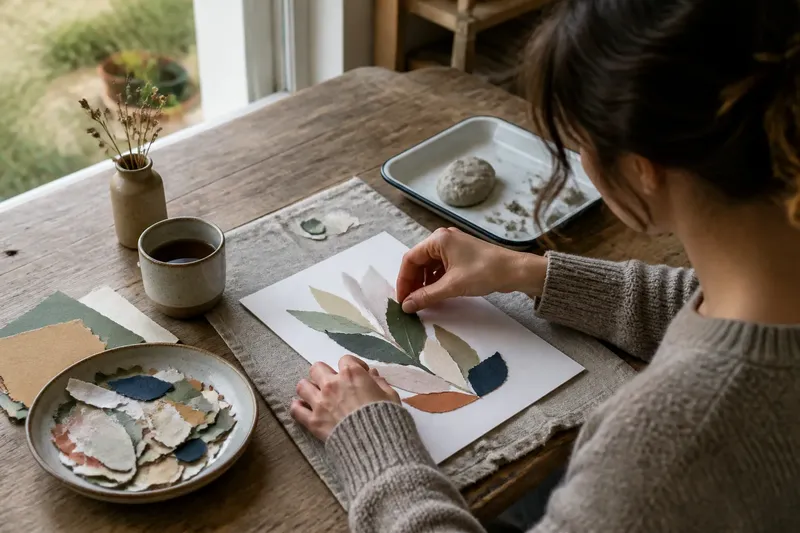
Say you have a few sheets of scrap paper and want to see whether you enjoy making collages. Choose a single sheet as a base, tear shapes from the others and arrange them before deciding where they belong. The expected result is a visible composition and a clearer sense of whether tearing and arranging hold your interest; glue can wait until you know you want to keep the arrangement.
Prepare one working area
Clear enough space for the material and your hands. Put the chosen material within reach, then move unrelated supplies out of sight. This small reset makes it easier to tell whether you need another tool for a real reason, rather than because it happens to be nearby.
Use ordinary objects as supports where suitable: a plate can hold small paper scraps, and a washable tray can contain loose clay. Think of the boundary as a plate beneath a biscuit: it keeps the working area legible without dictating what the finished work must look like. Choose a surface that suits the material and your home.
Before beginning, decide what “done for now” means. It might be when you have made one arrangement, filled a small patch of paper, or explored a few ways to bend the material. A stopping point prevents an open-ended pastime from becoming an obligation, especially when the first attempt is simply for learning.
Work before adding
Use the material in a few different ways before bringing in another. Fold, tear and layer paper; pinch, roll and flatten clay; twist, loop and drape yarn. The point is not to exhaust every possibility. It is to learn which actions feel inviting and which ones leave you stuck.
If you pause, ask what is actually missing. Is the material difficult to hold? Would a tool solve a specific problem, or are you unsure what to make next? A tool may help with the first issue. For the second, a narrower prompt is often more useful than another purchase.
Keep any useful observations simple. You might notice that paper is satisfying to arrange but difficult to fix in place, or that yarn is pleasant to handle but hard to keep tidy. Those notes tell you what to consider next time. They do not require you to judge the outcome as a success or failure.
When should you add supplies?
What if the material feels limiting?
Try changing the prompt or the way you handle it before adding supplies. A material can feel narrow when the task is too specific, or too vague to suggest a first move. If you can name a particular limitation after trying another approach, consider a tool or companion material that addresses it.
Do I need a complete beginner’s kit?
No. A kit may be convenient if it contains tools you already know you want, but it can also include items that do not suit your first experiment. Start with the material and add only what would help you make the next thing you have in mind.
What if I already own several supplies?
Choose one material from what you have and put the rest away for this session. That keeps the experiment focused without making existing supplies feel wasted. You can bring in another item later if it serves a clear purpose.
How do I know whether to continue?
Notice whether you would willingly return to the activity, and which part you would want to do again. Enjoying the process matters more than producing something polished. If it did not suit you, the small experiment has still helped you make a more informed choice.
Choose the next addition
When the session ends, decide what you want to repeat before deciding what to buy. If you enjoyed shaping the material but struggled to make neat edges, a simple cutting or shaping tool might be useful. If you liked the material as it was, keep working with it. If your interest faded, try a different material rather than collecting supplies for an activity you do not want to continue.
For a creative pastime, one material is a useful first boundary: it lets you find out what you enjoy doing before you plan around what you might need. When you start a creative pastime with one material, the next purchase can answer a question raised by making, not a question raised by an imagined supply list.