Before the Day Trip: How the Picnic Basket Took Shape
Picnic basket history reveals how a practical carrier came to suggest a leisurely outdoor meal, while its changing features still serve everyday needs.
Why does a picnic basket look like more than a container for lunch? Picnic basket history begins with a simple need: food prepared at home had to reach a place without a kitchen, table or cupboard. The basket made that journey manageable and, over time, became associated with the pleasure of eating outdoors.
There is no single design story that applies to every basket. Materials, closures and meals differed, and a household might carry food in whatever container it had to hand. The familiar picnic basket took shape through practical use as well as its connection with outdoor leisure.
Carrying food outdoors
A meal taken beyond the house needs a container that can bring different items together. Bread can be crushed, fruit bruised and a bottle can leak beside a cloth. Interlaced willow or other flexible fibres can make a basket both light to carry and sturdy enough for everyday provisions.
An open weave keeps the body from becoming a solid, heavy box, while a handle makes it possible to carry the load by hand. A lid or cover can help keep contents in place. These features are useful beyond picnics: baskets have served many purposes for moving and storing goods. Their suitability for carrying provisions helps explain their association with outdoor meals.
People did not need a purpose-built picnic basket to eat outside. A market basket, wooden box or cloth bundle could do the job. The recognisable picnic basket emerged gradually from the use of such containers and their later association with leisure dining.
From container to set
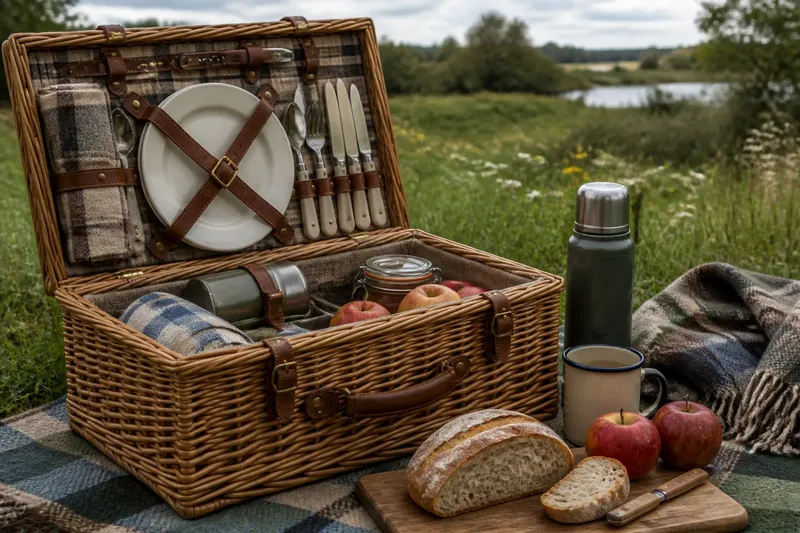
Some baskets were arranged to carry serving items as well as food. Plates, cups, cutlery, napkins and a cloth could be packed together, turning the carrier into a compact meal set. This was one possible design, not a universal stage in the basket’s history.
Straps and compartments can limit how much objects shift in transit. A fitted interior may keep crockery apart from food, while a fastening can hold the lid closed. A fabric lining softens the inside and may make the arrangement feel more like a portable cupboard. Like a drawer with a handle, the basket gives each item a place.
These fittings offer convenience, but they also affect the character of the outing. Matching cups and plates can make an outdoor meal feel planned; a plain container may suit a simpler lunch. Neither arrangement is inherently better. The choice depends on what needs carrying and how the meal is meant to be served.
Picnic basket design
Basket design balances protection with access. A tightly woven body can shield contents better than a loose weave, while a wide opening makes it easier to reach food. A hinged lid contains items; a basket without one is simpler to load and unload. Handles, hinges and clasps shape how the object works as well as how it looks.
Materials create different trade-offs. Willow and similar fibres give a basket a woven, natural appearance. Wood or metal can form a firmer shell, while fabric adds a softer interior. Some designs combine materials. No one form suits every outing: weight, sturdiness, cleaning and presentation all matter in different ways.
Say a family plans to carry bread, apples and a small flask to a nearby field. They put the bread in a cloth, place the apples beside it and secure the flask upright in a simple lidded basket. At the field, they open the lid and lift out the food without unpacking plates or cutlery they do not need. If the plan changes to a seated meal with crockery, they instead pack plates in a divided basket and fasten the lid; when they open it, the dishes are kept apart from the food. The choice follows the contents and serving plan, rather than a claim that one design is best for every trip.
A changing social object
An outdoor meal can be a practical pause during travel or work, or a deliberate leisure activity in a garden, park or countryside setting. The picnic basket can serve either purpose. Its presence makes it clear that food and company are being brought together away from home.
A neat, fitted basket may suggest hospitality, while its portability signals a meal beyond the dining room. These meanings sit alongside its practical role: the same object can protect food on the journey and help make the meal feel like an occasion.
That combination helps explain why the basket is a familiar visual shorthand for an outdoor meal. A handle, woven body, cloth and shared food are easy to recognise. Actual baskets vary, though: some are plain working containers, while others have fitted interiors or decorative details.
Modern carriers and old forms
Modern picnic bags and coolers can offer insulation or water resistance that a traditional woven basket may not provide. Many still follow the same basic idea: gather food and serving items in one portable package. A carrier with zipped pockets can organise its contents much as a basket uses compartments.
Traditional baskets remain recognisable because their form conveys leisure as well as utility. Woven sides, a lid and a handle make them seem suited to an unhurried meal, even when a soft bag might be easier to carry. Someone may choose a basket for its appearance, familiarity or the pleasure of bringing one distinct container.
For a basket used today, start with what it needs to carry and how it will be used. An open weave may suit dry, sturdy provisions and easy access. A lined or divided design may help keep dishes apart, while a cooler-style carrier is more appropriate for food that needs temperature control. Materials and care instructions vary, so follow the maker’s guidance.
- Check whether the meal includes fragile food; if it does, choose a lidded basket with a stable interior, but if it does not, an open basket may be easier to access.
- Check whether crockery is part of the plan; if it is, choose compartments or straps to separate the pieces, but if it is not, avoid carrying fittings you will not use.
- Check whether any food needs temperature control; if it does, use a suitable insulated carrier, but if it does not, a standard basket may be sufficient.
- Check whether the route includes awkward carrying; if it does, favour a secure closure and a comfortable handle, but if it does not, a simple handle may meet the need.
- Check whether the basket’s interior can be cleaned as required; if it can, use it for the planned provisions, but if it cannot, choose a washable liner or a different carrier.
- Check whether the basket fits the serving plan; if a cloth and loose food are enough, choose a plain carrier, but if you will serve a full meal, choose a design that can organise the dishes and cutlery.
Questions about picnic baskets?
What was a picnic basket originally used for?
It carried food and provisions from a home or another starting point to an outdoor place. A general-purpose basket could do the job before a distinct association with leisure dining took hold.
Why do some baskets have fitted compartments?
Compartments separate food, crockery and cutlery, helping limit movement during a journey. They also let one carrier hold both provisions and serving items.
Are wicker and willow the same material?
Wicker describes a weaving method, not a particular plant. Willow is one material used in woven baskets, alongside other flexible fibres.
Why does the picnic basket remain a familiar image?
Its handle and woven body are easy to recognise, and its association with shared food suggests an outdoor meal. It combines practical transport with the idea of making time to eat outside.
Picnic basket history is not a single progression from plain carrier to fitted set. It reflects different ways to move a meal and make room for eating outdoors. When choosing a basket, match its closure, lining and compartments to the food and serving items you actually plan to carry.